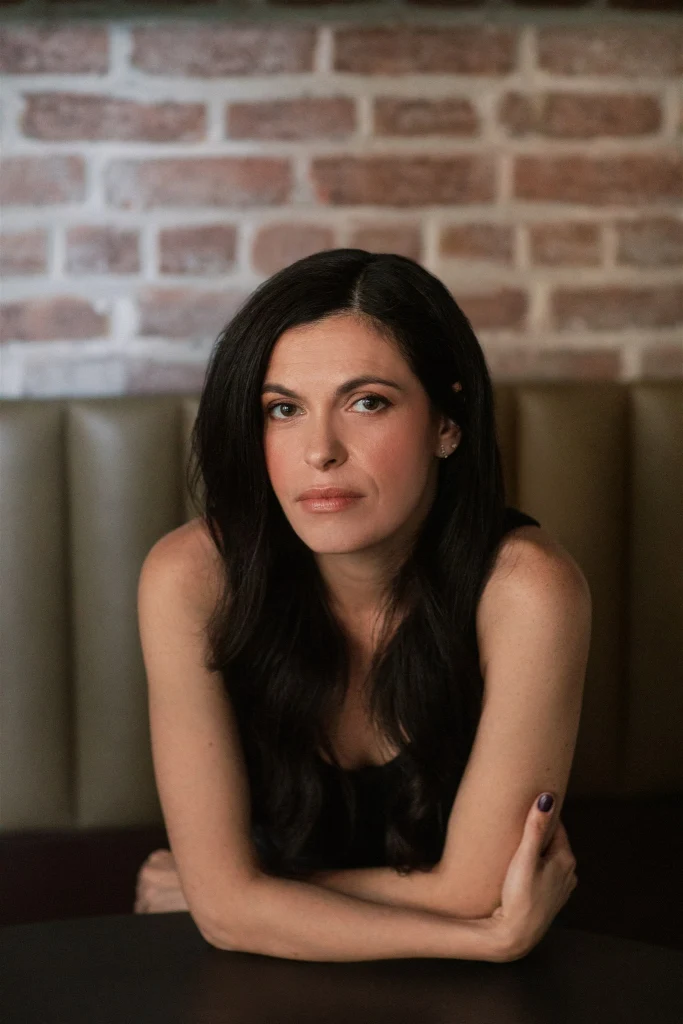
Alia Dastagir
Alia Dastagir is an award-winning journalist and former reporter for USA Today. Her work focuses on gender and mental health.
Dastagir was one of eight U.S. recipients of the prestigious Rosalynn Carter Fellowships for Mental Health Journalism. She won a first-place National Headliner Award for a series on suicide and was awarded the American Association of Suicidology’s Public Service Journalism Award. Her book on women and online abuse, “To Those Who Have Confused You to Be a Person: Words as Violence and Stories of Women’s Resistance Online,” was published by Crown in 2025. Kirkus called it, "A brilliant analysis of gender-based violence on- and offline.”
Dastagir has appeared on CNN, NPR and C-SPAN to discuss her reporting. Her book has been featured in outlets such as The Washington Post, PBS, Electric Literature, and Playboy. She has been a panelist for various free speech, anti-violence, and media organizations, including PEN America, the Institute for Research on Male Supremacism, and the Women’s Media Group. She has an MFA in creative writing from NYU, where she was an Axinn fellow.
Book
Book
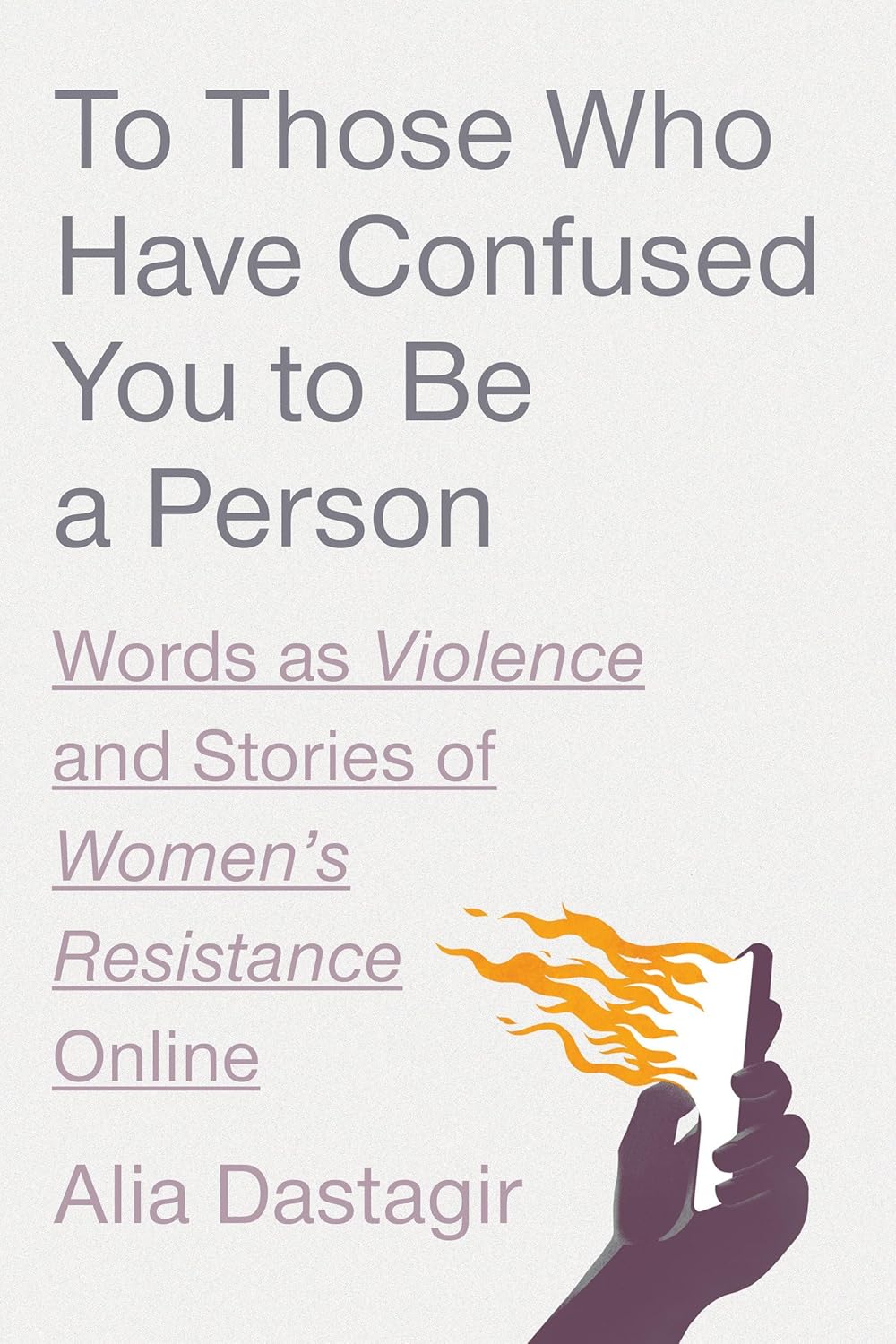

To Those Who Have Confused You to Be a Person
"
This is a deeply researched and clearly argued book, and Dastagir’s empathy and forays into her personal life make it particularly effective. A brilliant analysis of gender-based violence on- and offline.
"
"
[A] meticulous accounting of the effects of online harassment, the way it can upend women’s careers, their health and their minds.
"
"
An astonishing, brilliant, and timely book, Dastagir’s To Those Who Have Confused You to Be a Person sheds more light on misogynistic online culture and what women face today as a result than any other book I have read.
"
"
Painstakingly researched, and emotionally generous towards its reader, powerfully acknowledging the legitimacy of trauma caused by online abuse and providing real, helpful solutions and reframes.
"
"
To Those Who Have Confused You to Be a Person marries scientific research and lyrical writing to remind readers that our bodies react to violence in different ways and that resisting patriarchal and white supremacist forces is never easy, but the fight will always be worth it.
"
"
This beautifully written book gives us the courage to make sense of the concerns we all hold about the harms of the internet and is a clarion call that our humanity is valuable and worth caring deeply about when it comes to how we engage with technology on an everyday basis.
"
"
This book is both a manual and a manifesto for bringing about a better way to exist online.
"
Press
Press
Writing
A Beloved Camp, a Lost Boy and the Lifelong Impact of Child Sexual Trauma
When Peter Wien was 10 years old, he started biting his hand, gnawing on it almost daily, his mouth sculpting the soft skin between his thumb and index finger into an arched callus. Occasionally, he broke flesh. Biting was how Peter managed what was happening at camp.
A Marshall University student is in prison for rape. His victims reveal how the school failed them.
The remembering is sharp – every detail, each decision, the cleaving of her life. Alicia Gonzales remembers sitting on the bed in her dorm room at Marshall University. She remembers what she wore – sweatpants and a long-sleeved shirt, no make-up, hair fastened in a French braid. It was approaching afternoon. She didn’t want to be alone with him, but the friend who was with her left, so she was alone with him.
They left their children to fight a pandemic with no end. Would they do it again?
They begged Christine Haines not to go. First her father, who tried reason. You have two small children," he pleaded. "What happens if you die? Then Christine's daughter, whose sobs appealed to that elemental place inside her. Please don't go mommy," she cried. "I don't want you to go. Please don't get sick.
Thousands of messages show what it really means to help someone who’s suicidal
A little over a decade ago, Deena Nyer Mendlowitz and Susan Messing began a conversation on Facebook Messenger that would grow to more than 5,000 chats and reveal the complexity of suicidal suffering.
What do men get that women don't? Here are a few things
The U.S. government once asked women what they wanted. It was 1977, and the eyes of the nation turned to Houston as an estimated 20,000 people — Gloria Steinem and Coretta Scott King, Democrats and Republicans, lesbians and straight women, those who were born in America and some who were not — gathered for the only federally-funded women’s rights conference of its kind in U.S. history.
Black Americans’ health is in crisis. What will it take for them to be well?
America’s parents want paid family leave and affordable child care. Why can’t they get it?
The dilemma at dinner concerns a little less than $25 and how much it's worth to this family of four. Whitney and Tim Phinney couldn't have imagined how much time they would spend scrutinizing amounts like these, weighing options that never seem ideal. But then they had children in America.
Why American moms are seriously struggling
Mother's Day brings syrupy ads and greeting card platitudes. Maybe flowers, jewelry, breakfast made by someone other than her. But there's dissonance between the ritual and the reality. We celebrate moms who work to meet society's demands, who overextend to fill in the gaps, who never cease sacrificing for those they love. But is this the version of motherhood to revere?
Mental health professionals are the ones taking care of us: Who’s taking care of them?
When a world in pandemic shut down, the mental health professionals did not. They kept working, many more than ever, counseling patients on how to survive something they'd never seen before, something they feared themselves. They counseled while the virus ravaged their neighborhoods, with their children in the background, through months of racial unrest and a presidential election that was the most polarizing in many of our lifetimes.
How the pandemic changed lives: In a horrific year of loss, some unexpected joys
The pandemic took so much this past year – more than we are capable of grasping, let alone tallying. It took jobs and experiences, weddings and graduations, safety and certainty. It took the ground below our feet. It took many people we love. But the pandemic gave, too. It granted time, and many people relished it. People found new hobbies, new perspectives, new connections. Some people found themselves.
At Tokyo Olympics, women athletes say 'enough'
There's a story unfolding at the Tokyo Olympics, one as extraordinary as the exquisite tumbles and water-slicing strokes, the explosive lifts and dramatic finishes. As the world watches, women athletes are saying "enough."
She worked in suicide prevention. Then one day she had to save herself.
With practiced precision, Shelby Rowe uses a small needle to lift each bead, stitching it into fabric, coaxing it to become something more. Her black hair fans across hunched shoulders. A silver tree of life hangs from her neck, tethering her to the past, anchoring her in the present. For Rowe, this Native American tradition isn’t just art. Beading is part of survival.